

Learning Resource Center

Welcome!

Your one-stop, no-cost library for building stronger recovery housing and support programs — courses, guides, webinars, podcasts, NAADAC CE opportunities, research, and more.

Whether you’re opening your first recovery home, leading an established program, working as a peer or recovery support provider, or a community partner, there’s something here for you.

ExploreLearnGrow

A key with a house keyring in a front door
One hiker helping another up to a mountaintop
Learning Center Support
Publications & Papers

Establishing Quality and Outcome Measures for Recovery Housing: A Tiered Approach Supporting Service Evolution

Proposes a tiered matrix of quality and outcome measures that recovery housing providers can adopt at their own capacity level, filling the gap left by clinical SUD quality measures that do not fit recovery support services.

Publications & Papers

Addressing rural and non-rural substance use disorder stigma: Evidence from a national randomized controlled trial

Evidence from a national randomized trial (N = 2,721) on whether education about recovery housing and personal recovery stories reduce stigma differently in rural and non-rural communities.

Newsletter

April 2023: How Physical and Social Activity Aids Recovery

Profiles The Phoenix, the sober active community whose 200,000-plus members build recovery through free classes and events, and what its virtual offerings mean for rural communities.

Infographic

The Peer-Led Social Model: A Recovery Ecosystem

A one-page diagram of the peer-led social model, tracing how referral sources connect people to a recovery home's supports — peer support, case management, life skills, stable housing and more — to build recovery capital.

Newsletter

August 2026: The Science of Recovery: How the Brain Heals

Explore the science of recovery and how substance use affects the brain’s reward, stress, decision-making, learning, and memory systems. This newsletter examines the brain’s healing process through different stages of recovery and offers practical strategies recovery housing providers can use to create safe, supportive environments that promote healing, regulation, and long-term recovery.

Infographic

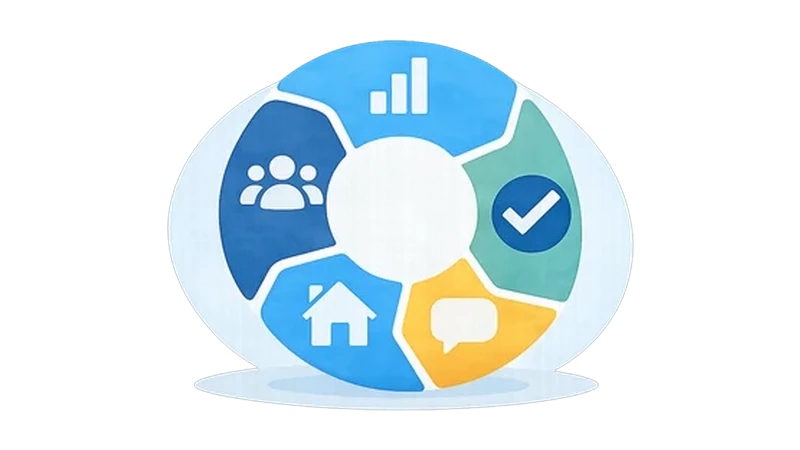
Components of a Recovery Ecosystem

A one-page map exploring six components that build a recovery ecosystem

Newsletter

December 2024: Peer-driven Social Model of Recovery and The History of the Healing Place

The story of The Healing Place in Louisville — the peer-driven model that inspired Recovery Kentucky and then the Fletcher Group — and a tribute to its founder Jay Davidson.

Newsletter

April 2026: Recovery Is Always a “We Thing,” Never a “Me Thing”

Tara Moseley Hyde on Community-Based Recovery Support Services — why the medical and social models work best together rather than in competition, and recovery as a “we thing.”

Newsletter

November 2025: Understand the Financial Challenges Facing Recovery Homes and Where to Look for Help

Funding is the number one challenge recovery homes can face. Read about the blended-funding model behind Recovery Kentucky, the Economic Calculator, and additional funding sources.

Newsletter

December 2025: Pregnant and Parenting Women Can Receive the Recovery Housing and Services They Need for Long-Term Recovery

Read about PEARL and its Grace House women’s center in rural Franklin County, Virginia, which houses pregnant and postpartum women in recovery an hour’s drive from the nearest services.

Newsletter

June 2026: A New Financial Model for Non-Profits

Seed Sower CEO Jay Phillips on braided funding — why grants alone leave a non-profit precarious, how a revenue-positive transport service pays for recovery housing, and data-driven storytelling.

Newsletter

October 2024: Learn How to Share Your Story and Improve Your Public Speaking

Learn how to share your story, and improve your public speaking.

Showing 12 of 206 resources
Load More
In Partnership With

Interested in Partnering or Have an Idea to Share?
Get in Touch!

Fletcher Group is a RCORP Rural Center of Excellence in Substance Use Disorder Recovery

www.hrsa.org

The Learning Center is supported by the Health Resources and Services Administration (HRSA) of the U.S. Department of Health and Human Services (HHS) as part of an award totaling $3.3 million, with 0% financed with non-governmental sources. The contents are those of the author(s) and do not necessarily represent the official views of, nor an endorsement, by HRSA, HHS, or the U.S. Government.