
Learning Resource Center

Welcome!

Your one-stop, no-cost library for building stronger recovery housing and support programs — courses, guides, webinars, podcasts, NAADAC CE opportunities, research, and more.

Whether you’re opening your first recovery home, leading an established program, working as a peer or recovery support provider, or a community partner, there’s something here for you.

ExploreLearnGrow

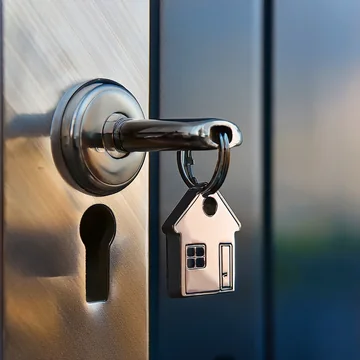
A key with a house keyring in a front door
One hiker helping another up to a mountaintop
Learning Center Support
Newsletter

December 2025: Pregnant and Parenting Women Can Receive the Recovery Housing and Services They Need for Long-Term Recovery

Read about PEARL and its Grace House women’s center in rural Franklin County, Virginia, which houses pregnant and postpartum women in recovery an hour’s drive from the nearest services.

Newsletter

September 2023: What Can Recovery Allies Do?

Recovery Allies author Alison Webb on recovery capital in its personal, social and community forms, and the actions allies can take — marking Recovery Month and the 60 million Americans in recovery.

Newsletter

April 2026: Recovery Is Always a “We Thing,” Never a “Me Thing”

Tara Moseley Hyde on Community-Based Recovery Support Services — why the medical and social models work best together rather than in competition, and recovery as a “we thing.”

Newsletter

August 2026: The Science of Recovery: How the Brain Heals

Explore the science of recovery and how substance use affects the brain’s reward, stress, decision-making, learning, and memory systems. This newsletter examines the brain’s healing process through different stages of recovery and offers practical strategies recovery housing providers can use to create safe, supportive environments that promote healing, regulation, and long-term recovery.

Newsletter

March 2026: Identify Trauma and Provide Clients with Appropriate Trauma-Informed Care

Cecily McMillan, author of The Scars of the Chosen, on trauma as an inside job, why our hardest habits are survival strategies, and a three-part resiliency toolkit.

Newsletter

September 2025: How to De-Escalate and Resolve Any Kind of Conflict

Conflict resolution expert Sal Corbin on why avoiding conflict carries its own cost, the skillset for handling it, and what to actually do in the moment.

Newsletter

April 2023: How Physical and Social Activity Aids Recovery

Profiles The Phoenix, the sober active community whose 200,000-plus members build recovery through free classes and events, and what its virtual offerings mean for rural communities.

Newsletter

January 2026: Artificial Intelligence Is Helping Overcome Geographic and Financial Barriers to Recovery

OpenRecovery’s Zachary Gidwitz and Alex Weber on what AI in recovery is and is not, how to get it right, and an introduction to Kai, a therapist-led, AI-supported mental health platform — including how readers can shape it.

Newsletter

September 2026: Understand and Overcome Recovery House Financial Challenges

Explore the financial and housing challenges affecting the sustainability of recovery residences and the research identifying strategies to address them. Highlighting barriers to stable recovery housing, the importance of diversified funding, strong business practices, and how research is being translated into practical tools and approaches to strengthen long-term recovery housing sustainability.

Newsletter

June 2026: A New Financial Model for Non-Profits

Seed Sower CEO Jay Phillips on braided funding — why grants alone leave a non-profit precarious, how a revenue-positive transport service pays for recovery housing, and data-driven storytelling.

Newsletter

October 2025: Everything You Need to Know about Deflection, Including Challenges Unique to Rural Areas

Treatment Alternatives for Safer Communities (TASC)’s Jac Charlier, Guy Farina, and Sydney Goggins on deflection — the six pathways that route people to treatment instead of arrest, the rural obstacles, and how to start a program.

Newsletter

May 2026: Handle Challenging Behavior in Your Recovery Home

Carmin Long and Alan Muia on resident behavior in rural recovery homes — taming the “lizard brain,” the distinction between the person and the behavior, and a worksheet to work it through.

Showing 12 of 208 resources
Load More

In Partnership With

Interested in Partnering or Have an Idea to Share?
Get in Touch!

Fletcher Group is a RCORP Rural Center of Excellence in Substance Use Disorder Recovery

www.hrsa.org

The Learning Center is supported by the Health Resources and Services Administration (HRSA) of the U.S. Department of Health and Human Services (HHS) as part of an award totaling $3.3 million, with 0% financed with non-governmental sources. The contents are those of the author(s) and do not necessarily represent the official views of, nor an endorsement, by HRSA, HHS, or the U.S. Government.